How to Tell If a Tree on Your Sewickley Property Is Diseased or Dying
Trees on a Sewickley, PA, property can become diseased or start dying without obvious warning. Acting on the right signals early can mean the difference between saving a tree and losing it. The following guide walks through seven visible warning signs, what each may mean, and when to call a professional.
Why Sewickley Homeowners Need to Watch Their Trees Closely
Sewickley sits along the Ohio River in Allegheny County, where a humid, four-season climate creates favorable conditions for tree stress. Moist springs and warm summers make fungal disease a recurring concern. Oaks, maples, ash trees, sycamores, and dogwoods are all common on local properties, and each species carries its own vulnerabilities. Consistent tree care is the most reliable way to catch problems early and keep your yard safe.
What Are the Warning Signs That a Tree Is Diseased or Dying?
Diseased and dying trees often give clear physical signals before they become dangerous. Here are seven things to watch for.
List of services
-
1. Canopy DiebackList Item 1
Dead branches at the top or outer edges of a tree, while the lower portions still look healthy, are an early sign of decline. It can point to root damage, vascular disease, or pest activity. If more than a quarter of the canopy appears dead or bare, schedule professional tree care in Sewickley, PA, promptly.
-
2. Bark That Is Peeling, Cracking, or MissingList Item 2
When bark peels in large sections, cracks deeply, or shows sunken cankers, the tree may be fighting a fungal infection or beetle infestation. In western PA, emerald ash borer damage often appears first as S-shaped tunnels under peeling bark on ash trees. Sawdust-like material near the base is a secondary clue.
-
3. Fungal Growth on the Trunk or RootsList Item 3
Mushrooms, shelf fungi, or bracket growths at the base or on the bark signal internal wood rot that is often well advanced by the time it becomes visible. Once significant rot sets in, a tree can become structurally unsafe after heavy storms. Sewickley's wet springs make fungal issues especially common on older oaks, maples, and sycamores.
-
4. Unusual Leaf SymptomsList Item 4
Leaves reveal a lot about tree health. Watch for browning or yellowing outside normal fall timing, and for dark irregular blotches that may indicate anthracnose. Compare the tree with neighboring trees of the same species: dropping leaves noticeably earlier is a warning sign. Wilting on only one side of the canopy can suggest verticillium wilt in maples, ashes, or dogwoods. Leaf symptoms appearing in spring or early summer should not be dismissed as seasonal variation. Routine tree trimming and care can help identify these issues before they escalate.
-
5. Visible Lean or Sudden Shift in Position
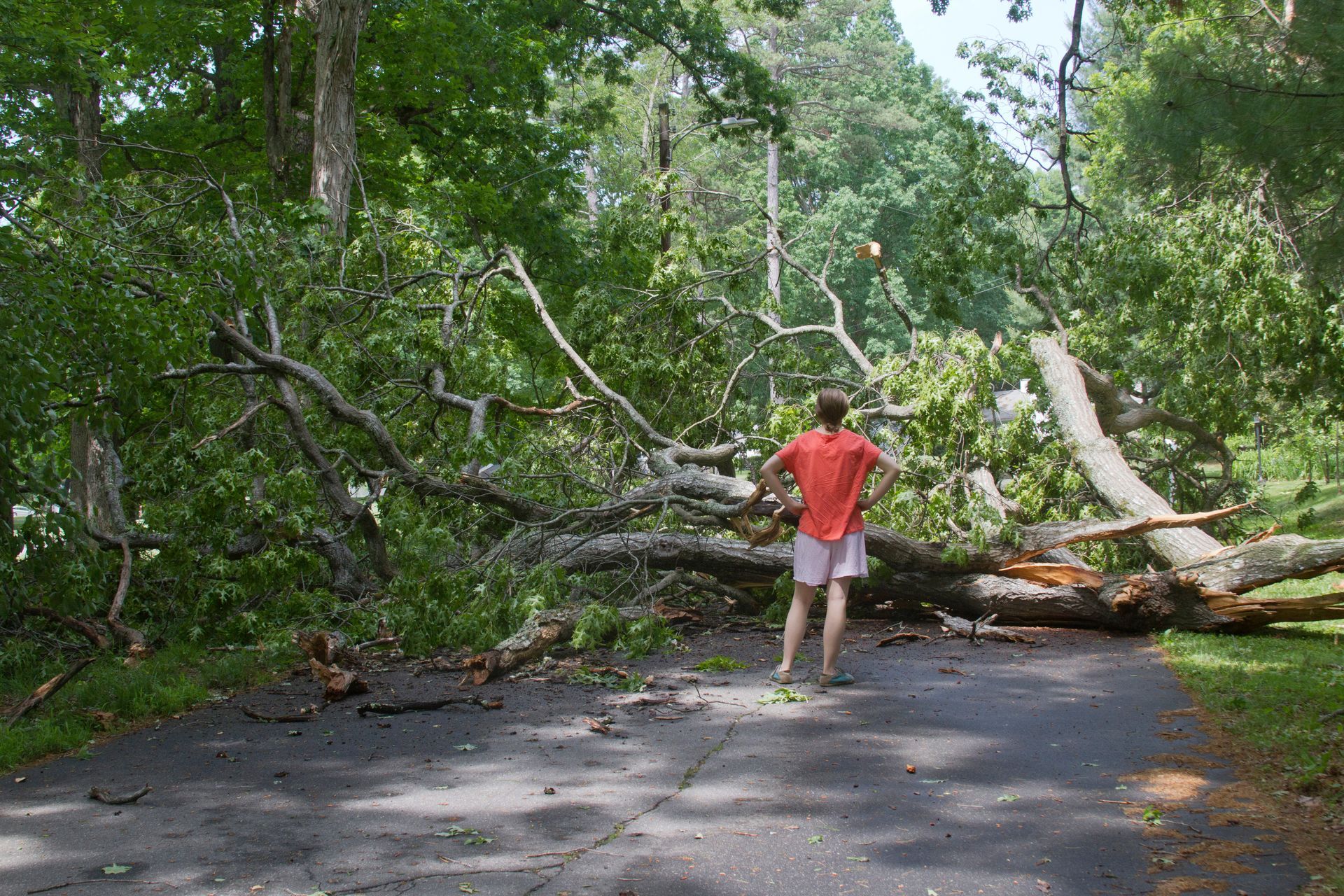
A tree that has always stood straight but is now leaning may have suffered root failure or structural damage. Sewickley's hillside terrain and clay-heavy soils make root systems more vulnerable after heavy rain. A sudden lean is generally an emergency, since the tree may be at risk of falling onto a structure, vehicle, or neighboring property.
-
6. Root Damage or Soil Heaving
Cracked or lifting soil near the base can indicate a weakening root system. Construction work, compacted soil, or utility trenching near the drip line can all cause damage that may not appear in the canopy for a season or two. Proactive tree care helps catch these conditions earlier.
-
7. Dead Branches That Snap Cleanly
Healthy branches bend under pressure. A branch that snaps sharply with little force, or shows no green tissue when scratched, is dead. Scattered dead branches throughout the crown signal significant stress. If dead wood accounts for a large portion of the canopy, professional tree care in Sewickley, PA, can determine whether the tree can be saved or needs to come down.
When to Act
Not every warning sign means immediate removal. Minor anthracnose or a single dead branch may allow for monitoring and targeted pruning. However, a tree should be evaluated by a professional as soon as possible if it is leaning toward a structure, has large sections of dead crown, shows significant fungal growth at its base, or is dropping branches without obvious cause.
Oak wilt, a documented concern in western Pennsylvania, can kill a red oak within a single season. If an oak on your property is dropping dull green leaves rapidly in summer, do not wait to call for an assessment.
Can a Diseased Tree Be Saved Without Removing It?
It depends on the disease, how far it has progressed, and the species. Some fungal infections can be managed with pruning and improved tree care routines, while others, such as oak wilt, have no effective treatment once the tree is infected. A professional assessment can determine which path makes sense.
How Often Should Trees on My Property Be Inspected?
Most arborists recommend a visual inspection at least once per year, ideally in spring when stress symptoms are easier to spot. Properties with older trees, recent construction, or a history of storm damage may benefit from more frequent checks.
Is a Leaning Tree Always an Emergency?
Not always. Trees that have grown at a consistent angle since they were young are often structurally stable. A tree that shifts its lean after a storm or heavy rain, or for no obvious reason, should be evaluated by a professional as soon as possible to rule out root failure.
Get a Professional Tree Health Assessment Serving Sewickley
Hudson & Sons Tree Service has served the greater western PA region for over 40 years, offering professional tree care and tree removal for homeowners dealing with diseased, declining, or hazardous trees. If you have noticed any of the signs above, the team can assess the situation and walk you through your options. Call (724) 336-4124 or contact us online to request a free estimate. Find Hudson & Sons Tree Service on Google Maps.